The Rise of Esports: From Niche Hobby to Global Powerhouse
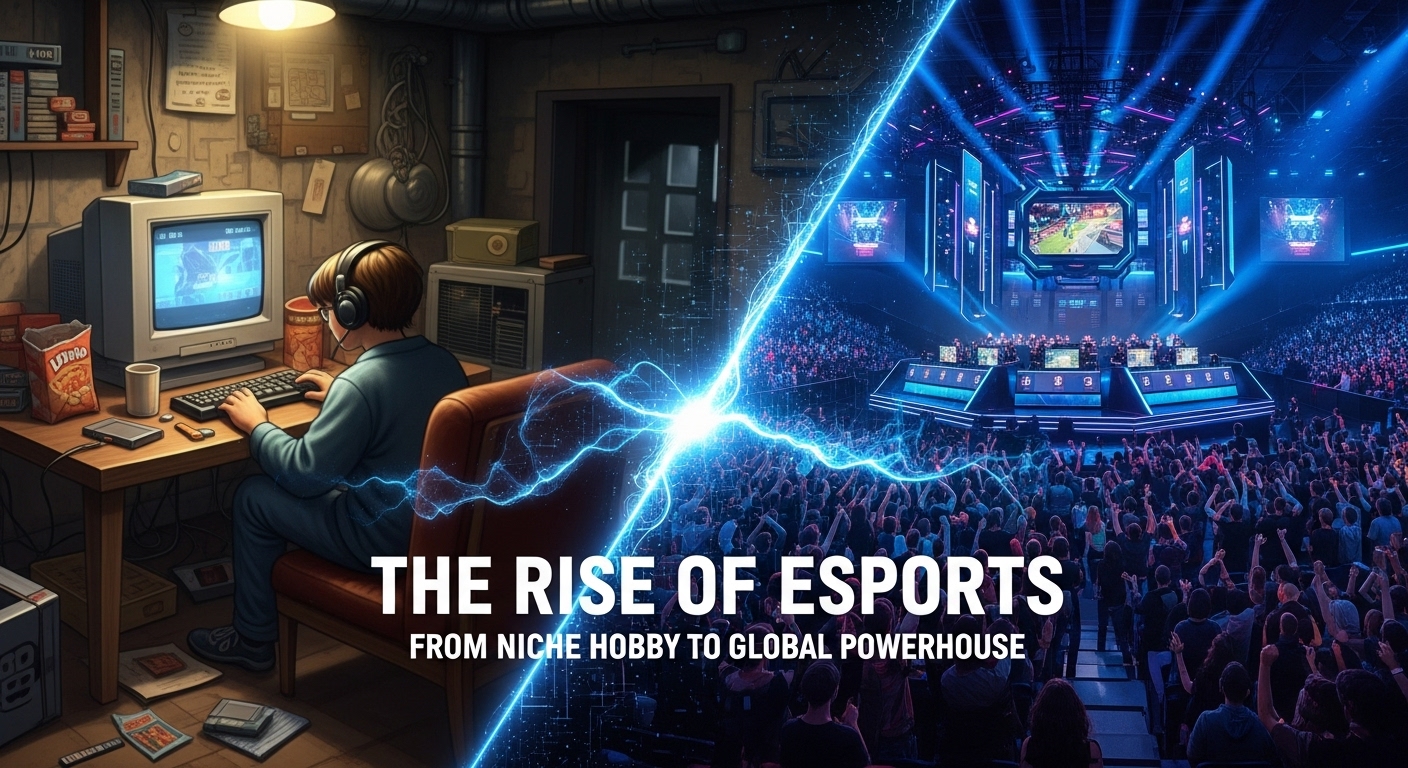
Esports, short for electronic sports, has evolved into one of the most powerful entertainment industries in the world. What was once a hobby limited to arcades and local tournaments has transformed into a global industry worth billions of dollars, attracting millions of viewers and fans from every corner of the globe. In this blog, we’ll dive deep into how esports grew from a small community of gamers to a professional ecosystem that rivals traditional sports.
The Early Days of Competitive Gaming
The concept of competitive gaming dates back to the 1970s when players competed on arcade machines in local game shops. Titles like Space Invaders and Pac-Man created early competitions, and in 1980, Atari hosted the first official video game competition with over 10,000 participants. However, these were isolated events and lacked the infrastructure or audience of today’s esports.
The 1990s marked the rise of the PC gaming scene. Titles like Quake, StarCraft, and Counter-Strike laid the groundwork for online competitions. LAN parties became common, and gamers began to take pride in building communities around their favorite games.
The Internet Revolution
The rise of the internet changed everything. Online multiplayer gaming made it possible for players across continents to compete without being physically present. This was the turning point that transformed gaming into a legitimate sport. South Korea led the way, where StarCraft became a cultural phenomenon and professional players were treated like celebrities. Cable channels in Korea even broadcast live matches, creating the first esports superstars.
The Growth of Professional Leagues
By the 2000s, esports began to attract major sponsors and investors. Professional leagues such as Major League Gaming (MLG) in the United States and the World Cyber Games (WCG) started to create structured tournaments. Prize pools grew larger, and teams began forming like traditional sports clubs.
Games such as Dota 2, League of Legends, and Counter-Strike: Global Offensive became staples of esports. Riot Games’ League of Legends World Championship began drawing audiences that rivaled major traditional sports events. The International, Dota 2’s annual tournament, broke records with prize pools exceeding $30 million, crowdfunded by its passionate community.
Streaming and the Global Explosion
The real explosion of esports can be attributed to streaming platforms like Twitch and YouTube Gaming. For the first time, anyone could watch their favorite players live, and aspiring gamers could broadcast their gameplay to millions. This accessibility democratized esports and turned professional players into influencers with massive fanbases.
Millions of fans began to follow not just the games, but also the personalities behind them. Esports became more than just competition—it became entertainment, culture, and community.
The Business of Esports
Today, esports is a billion-dollar industry. Teams are sponsored by global brands like Coca-Cola, Nike, Red Bull, and Mercedes-Benz. Franchised leagues like the Overwatch League and League of Legends Championship Series resemble traditional sports leagues with permanent teams, city affiliations, and huge salaries for players.
Merchandising, streaming rights, sponsorships, and advertising have turned esports into a lucrative industry. Universities now offer scholarships for esports athletes, and countries recognize esports players as professional athletes.
The Future of Esports
With technological innovations like virtual reality, augmented reality, and AI, esports is set to continue its rapid growth. Global expansion into new markets like Africa, the Middle East, and South America promises a larger player base and more fans.
Esports is no longer the future—it’s the present. Millions tune in every week to watch matches, while young players dream of becoming professional gamers, much like children once dreamed of becoming footballers or basketball stars.