The Rise and Revolution of Esports: How Competitive Gaming Became a Global Phenomenon
Introduction
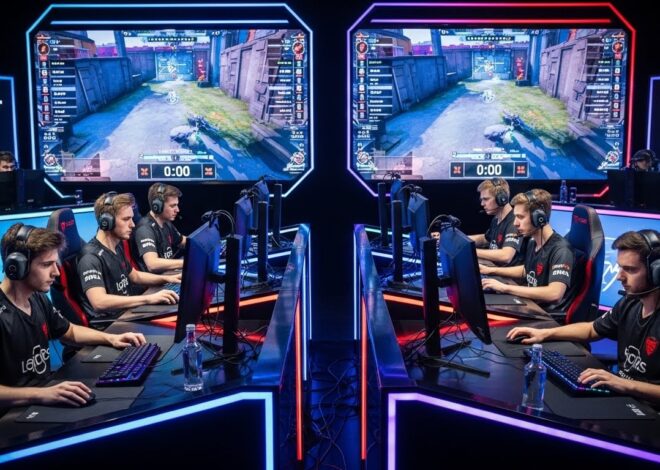
Esports, short for electronic sports, has evolved from small local gatherings of gaming enthusiasts into one of the most powerful entertainment industries in the world. What was once considered a pastime for teenagers in internet cafés has now become a legitimate professional sport, complete with international tournaments, multimillion-dollar sponsorships, and massive global audiences. From its early roots in arcade competitions to today’s packed arenas and live-streamed championships, esports represents one of the fastest-growing cultural movements of the 21st century.
This blog explores the origins, growth, and cultural impact of esports while also examining how technology, media, and community passion have transformed competitive gaming into a worldwide spectacle.
The Origins of Esports
The story of esports begins long before anyone used the term itself. In the early 1970s, video games were still in their infancy. The first notable competitive gaming event took place at Stanford University in 1972, where students competed in the game Spacewar!. The winner received a year’s subscription to a magazine—a humble prize compared to today’s multimillion-dollar rewards.
By the 1980s, arcade gaming culture had exploded. Titles like Pac-Man, Donkey Kong, and Space Invaders became symbols of a growing gaming generation. High score competitions were featured in magazines, and local arcades became the early battlegrounds for players seeking fame and recognition. The 1980 Space Invaders Championship, organized by Atari, drew more than 10,000 participants across the United States, marking one of the first large-scale video game tournaments in history.
During the 1990s, the competitive gaming landscape began to evolve alongside technology. The rise of personal computers introduced new genres like real-time strategy (RTS) and first-person shooters (FPS). Titles such as StarCraft, Quake, and Counter-Strike became early pillars of competitive gaming. LAN parties—where players connected their computers in local networks—laid the foundation for modern online competition.
The Emergence of Professional Esports
The early 2000s marked the true beginning of professional esports. As internet connectivity improved, players no longer needed to meet physically to compete. Online gaming platforms allowed people from across the world to test their skills against each other, giving rise to online tournaments and global leaderboards.
Games like Warcraft III, Halo, Counter-Strike 1.6, and StarCraft: Brood War defined this era. South Korea emerged as a major esports hub, driven by the popularity of StarCraft. Korean players became national celebrities, and the country established professional teams, dedicated gaming channels, and even government-supported esports associations. This period laid the groundwork for what esports would later become—a structured, organized, and commercially viable industry.
By the mid-2000s, organizations such as Major League Gaming (MLG) in the United States began to professionalize competitive gaming. Players signed contracts, teams gained sponsors, and tournaments began offering significant prize pools. The shift from casual competition to structured leagues represented a turning point where gaming began to be viewed not merely as entertainment, but as a legitimate profession.
The Explosion of Global Esports
The 2010s ushered in an era of exponential growth. Streaming platforms like Twitch, YouTube Gaming, and Facebook Gaming revolutionized how audiences consumed esports content. For the first time, fans could watch their favorite players and teams compete live from anywhere in the world. Esports became not only a competitive activity but also a form of entertainment, akin to traditional sports broadcasting.
Games like League of Legends, Dota 2, Overwatch, and Counter-Strike: Global Offensive became global sensations. Riot Games’ League of Legends World Championship drew millions of viewers annually, filling massive stadiums in Seoul, Paris, and Los Angeles. Valve’s The International, centered around Dota 2, broke records for the largest prize pools in esports history—surpassing $40 million in some years through community crowdfunding.
This surge in popularity attracted major investors, media networks, and corporate sponsors. Brands such as Intel, Red Bull, and Coca-Cola began sponsoring events and teams, recognizing the massive marketing potential of the esports audience—a demographic that was young, tech-savvy, and highly engaged.
The Cultural Shift: From Niche to Mainstream
The rise of esports reflects a broader cultural shift in how society views gaming. Once stigmatized as an anti-social hobby, gaming has evolved into a celebrated art form and a legitimate career path. Esports players, much like traditional athletes, now undergo rigorous training, strategic preparation, and even physical fitness routines to maintain their performance levels.
Universities across the world have started offering esports scholarships and degrees in game design, broadcasting, and team management. This educational integration signifies a remarkable transformation—from video games as leisure activities to integral components of modern academic and business structures.
Moreover, esports has influenced pop culture in countless ways. From fashion collaborations and music performances at tournaments to the rise of gaming influencers and streamers, esports has redefined the boundaries between entertainment genres. Major music artists perform at esports finals, and gaming characters have become part of mainstream media.
The Role of Technology in Esports Growth
Esports’ meteoric rise would not have been possible without rapid advancements in technology. High-speed internet, powerful gaming hardware, and sophisticated streaming platforms have all contributed to the seamless global connectivity that esports thrives on.
Game developers have also embraced competitive gaming as part of their ecosystem. Titles like Valorant, Apex Legends, and Fortnite were designed with esports potential in mind. These games feature regular updates, balanced mechanics, and tournament-ready modes to sustain both casual players and professional competition.
Virtual reality (VR) and augmented reality (AR) are also beginning to influence esports. Though still in early stages, these technologies promise immersive competitive experiences that could redefine how players and audiences interact with games. Similarly, artificial intelligence and data analytics are being used to study player behavior, enhance strategies, and improve team coordination.
The Business of Esports
Behind the excitement of tournaments and thrilling matches lies a complex business ecosystem. Esports is now a multibillion-dollar industry that spans sponsorships, advertising, broadcasting rights, merchandising, and ticket sales. Teams operate like traditional sports franchises, with management, coaching staff, analysts, and marketing departments.
Top organizations such as Team Liquid, FaZe Clan, and T1 have become global brands, expanding their presence beyond gaming into lifestyle and entertainment ventures. Esports organizations collaborate with apparel brands, music artists, and film studios, blurring the lines between digital and physical culture.
Investors see esports as the future of entertainment. With a projected audience surpassing 700 million worldwide, the potential for growth remains enormous. Even traditional sports teams and leagues, like the NBA and Formula 1, have launched esports divisions to engage younger audiences and explore new forms of fan interaction.
Esports and the Evolution of Community
Perhaps the most remarkable aspect of esports is its sense of community. Unlike traditional sports that often require expensive facilities or geographic limitations, esports exists in the digital realm, allowing anyone with a computer or console to participate. This inclusivity has cultivated a diverse global community bound by shared passion and creativity.
Online forums, social media groups, and fan communities have become the lifeblood of esports culture. Players collaborate, share strategies, and form friendships that transcend borders. The idea that someone in Brazil can team up with a friend in South Korea or the United States to compete in the same tournament reflects the truly global nature of esports.
Cosplay, fan art, and game-themed content also enrich the culture, turning esports events into full-fledged celebrations of creativity and fandom. The fans are not mere spectators—they are participants in the ecosystem, shaping narratives and fueling the energy that keeps esports alive.
The Challenges Facing Esports
Despite its tremendous success, esports faces significant challenges. Issues such as player burnout, lack of standardized regulation, and uneven prize distribution persist. Many professional players start their careers at a young age but retire early due to the physical and mental strain of competition.
Cheating, match-fixing, and doping are also concerns that mirror traditional sports scandals. Maintaining fair play in an online environment requires constant vigilance from organizers and developers. Additionally, gender representation and inclusivity remain ongoing challenges, with female and nonbinary gamers still facing barriers to recognition and participation.
Monetization and sustainability are other pressing issues. While top-tier tournaments attract massive sponsorships, smaller organizations and emerging players often struggle to maintain financial stability. As the industry grows, balancing profitability with community integrity will be crucial for its long-term future.
The Educational and Social Impact of Esports
Beyond entertainment, esports offers educational and developmental benefits. Competitive gaming enhances critical thinking, teamwork, communication, and decision-making skills. Many schools are incorporating esports clubs to teach digital literacy and collaboration through gaming.
Moreover, esports provides opportunities for individuals who might not excel in traditional sports to shine. It gives a platform to those who are passionate about strategy, creativity, and digital innovation. Esports also fosters inclusivity by allowing people of different backgrounds, physical abilities, and cultures to compete on equal footing.
The Future of Esports
As technology continues to evolve, so will esports. The next decade will likely see even greater integration with emerging technologies such as virtual reality, blockchain-based assets, and artificial intelligence-driven coaching systems. The line between player and spectator may blur further, with interactive viewing experiences allowing fans to influence live matches or view them from within the game world.
Esports will also continue to expand into traditional sports arenas, entertainment media, and education. More universities will develop esports programs, and global championships may one day rival events like the Olympics in cultural impact and viewership.
At the same time, sustainability and player welfare will take center stage. Organizations will need to focus on mental health support, fair contracts, and balanced competition to ensure the industry’s longevity.
Conclusion
Esports is far more than just gaming—it’s a movement that has redefined modern entertainment, technology, and community. It represents the power of connection in a digital world, where passion and skill can transcend borders and create shared experiences for millions.
From dimly lit arcades of the 1980s to packed stadiums filled with roaring fans, esports has journeyed through decades of innovation, struggle, and triumph. Its story is not just about competition but about culture, creativity, and the human drive to achieve mastery, whether on a physical field or in a digital arena.
The future of esports shines brightly, promising even greater possibilities for players, fans, and innovators alike. What began as a small gathering of enthusiasts has now become a defining force of global culture—a true testament to how far gaming has come and how much further it can go.