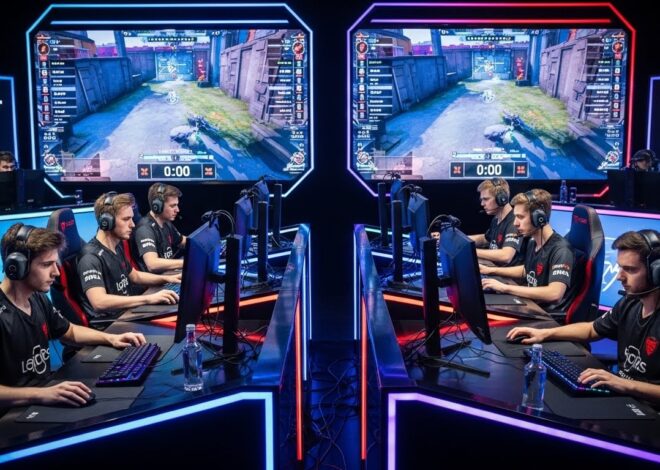
Esports: The Digital Arena Redefining Competitive Sports
In the world of sports, there’s a new contender vying for attention, and it’s not played with a ball, bat, or racket. It’s played with controllers, keyboards, and mice. Esports, or competitive video gaming, has surged in popularity, becoming a global phenomenon that attracts millions of viewers and generates billions in revenue. But what makes esports so compelling? How did a niche hobby evolve into a massive industry? In this blog post, we’ll explore the explosive growth of esports, its impact on the world of sports and entertainment, and its promising future.
The Rise of Esports: A Digital Revolution
Esports has its origins in the early days of gaming, when competitive play was limited to small tournaments and local meetups. However, it wasn’t until the late 1990s and early 2000s that esports began to find its footing on the global stage. Games like StarCraft, Warcraft III, and Counter-Strike provided the foundation for what would become an organized, professionalized scene. The growth of online multiplayer gaming and the increasing accessibility of the internet allowed players from around the world to compete in real-time.
The rise of streaming platforms like Twitch and YouTube also played a crucial role in boosting esports. Suddenly, fans could watch their favorite players and teams live, offering a new form of entertainment that blended gaming with the thrill of live sports. Today, esports tournaments fill arenas, broadcast live to millions of viewers, and are featured on major media networks.
Why Esports is Gaining Global Popularity
There are several factors that contribute to the rapid rise of esports. One of the most significant is accessibility. Unlike traditional sports, which often require expensive equipment or physical skills, esports can be played by anyone with a computer or gaming console. This democratization of access has led to a massive global following, as players and fans can easily participate, whether they’re in the U.S., South Korea, or Brazil.
The appeal of esports is also driven by its inclusivity. Esports is a space where individuals from all walks of life—regardless of age, gender, or background—can participate and compete at a high level. This inclusivity, combined with the fact that many esports games are free-to-play or low-cost, has made it a more accessible form of entertainment than traditional sports.
Esports as a Career: Professional Gamers and Beyond
With the rise of esports, many individuals now see gaming as a viable career path. Professional gamers dedicate hours of practice every day to perfect their skills, much like traditional athletes. The competition is fierce, with top players earning significant prize money, sponsorships, and brand deals. In fact, some esports athletes make more money annually than professional athletes in traditional sports.
But it’s not just about playing. The esports industry has created a wealth of other career opportunities, from coaches and analysts to event organizers and content creators. Many organizations, such as Cloud9, Team Liquid, and Fnatic, now employ large teams behind the scenes to support their players. The industry’s infrastructure continues to grow, making esports a viable and lucrative career option for a wide range of talent.
Esports as Entertainment: The Spectacle of Competitive Gaming
One of the most exciting aspects of esports is the way it has transformed gaming into a live spectator sport. Events like The International (Dota 2’s world championship), League of Legends Worlds, and Fortnite’s competitive tournaments now draw in audiences that rival traditional sports events. For example, The International 2018 had a prize pool of over $25 million, attracting millions of viewers and creating a spectacle that looked more like a major sporting event than a video game competition.
These events are often streamed live on platforms like Twitch, YouTube, and Facebook, where fans can watch, comment, and interact with players and other viewers. The immersive nature of esports tournaments is akin to a major sports broadcast, with high-quality production values, expert commentary, and engaging live audiences. This level of spectacle has helped esports break into the mainstream, making it an entertainment experience that is both interactive and accessible.
The Impact of Esports on Traditional Sports
As esports continues to rise in prominence, it’s increasingly starting to intersect with traditional sports. High-profile collaborations between esports organizations and mainstream brands have led to major sponsorship deals, such as those with Nike, Adidas, and Mercedes-Benz. These partnerships have helped validate esports as a legitimate form of entertainment.
In addition, professional sports teams have begun to invest in esports. Soccer clubs like FC Schalke 04, Manchester City, and Paris Saint-Germain now have their own esports teams, further blurring the lines between digital and physical sports. Some traditional sports leagues, like the NBA, have even ventured into the esports space by establishing virtual leagues for video game adaptations of their sports.
This convergence of the traditional sports world and esports is indicative of the growing recognition of esports as a mainstream sport.
Challenges and Controversies in Esports
While esports continues to thrive, it is not without its challenges. Issues like player burnout, lack of regulation, and match-fixing scandals have raised concerns about the industry’s long-term sustainability. Some players, particularly in fast-paced games like League of Legends, often face intense pressure and burnout due to the relentless schedule of tournaments and practice.
Another challenge is the lack of standardization in terms of regulations. While some esports games and tournaments have established rules for fair play, many other games remain unregulated, making it difficult to ensure that competitions are run ethically. The industry must address these issues to ensure its continued growth and credibility.
The Future of Esports
The future of esports is incredibly promising, with several emerging trends that suggest the industry will continue to evolve. One of the most exciting developments is the integration of virtual reality (VR) and augmented reality (AR). These technologies have the potential to completely change how esports competitions are played and viewed, creating more immersive experiences for both players and spectators.
Moreover, esports is expected to expand its reach into even more regions, particularly as internet access improves in developing countries. As more players and fans from around the world join the community, esports will become an even more global phenomenon.
With the increasing interest from investors, sponsors, and media companies, the infrastructure and financial backing for esports will continue to grow. Esports is on track to become a permanent fixture in the entertainment and sports industries, offering new opportunities for talent, business, and innovation.
Conclusion: The New Era of Competitive Sports
Esports has transcended its origins as a niche hobby to become a global entertainment juggernaut. With professional leagues, massive prize pools, and a rapidly growing fan base, esports has firmly cemented itself as a legitimate and exciting form of competition. Whether you’re a player, a fan, or someone just discovering the world of competitive gaming, esports offers something for everyone. The rise of esports signifies a new era in sports and entertainment, one where digital skills and technology shape the future of competition.