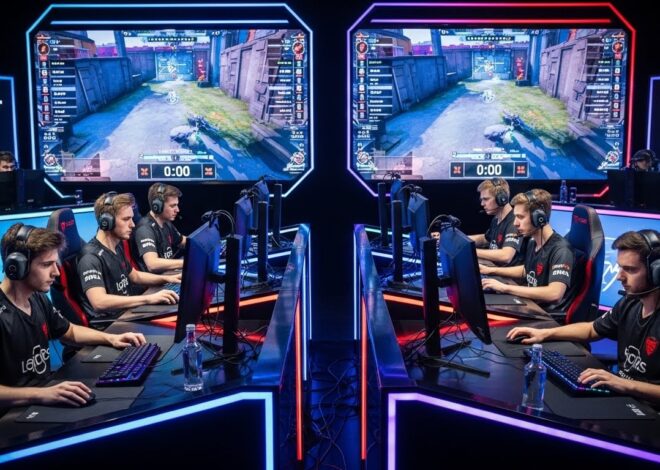
The Explosive Growth of Esports: A Deep Dive into the Future of Competitive Gaming
Esports, or competitive video gaming, has transitioned from a niche hobby enjoyed by a few enthusiasts into a global phenomenon. What was once considered a fringe interest has now become a multibillion-dollar industry, attracting millions of viewers and players, a plethora of corporate sponsors, and even traditional sports organizations looking to cash in on its explosive growth. Today, esports is not just a pastime for a select few but a legitimate career option, a source of entertainment, and a cultural force that influences everything from social media to television networks.
In this blog post, we will explore the history, evolution, and impact of esports, examining the factors behind its rapid rise, its current status, and its future trajectory.
The Genesis of Esports
To understand how esports became the powerhouse it is today, it’s important to look at its humble beginnings. Competitive gaming, in its earliest form, began in the 1970s and 1980s with arcade games. Space Invaders Championship, held in 1980, is often regarded as the first real gaming tournament. Though small in scale, it demonstrated the potential for competition within the gaming community.
In the 1990s, competitive gaming began to take shape, fueled by the rise of multiplayer games. Doom and Warcraft were some of the first games to feature online multiplayer components that allowed players to compete against each other remotely, setting the stage for online competitions. During this era, LAN (Local Area Network) parties became a popular social activity where gamers would gather to play against each other in person, forming the foundation of the competitive gaming scene.
However, it wasn’t until the late 1990s and early 2000s that esports truly began to take off. The launch of StarCraft in 1998 by Blizzard Entertainment proved to be a significant turning point, particularly in South Korea. The game’s blend of strategy and real-time decision-making helped establish StarCraft as one of the most popular competitive games of its time, with South Korea emerging as a global hub for esports.
The Birth of Modern Esports
While competitive gaming had been around for decades, the 2000s marked the birth of modern esports. Several key factors contributed to the evolution of esports into the professional industry we see today.
1. The Rise of Online Gaming and Streaming
With the advent of broadband internet in the early 2000s, online multiplayer gaming became more accessible to a wider audience. Players could now compete in tournaments without needing to gather physically in the same room. This opened up a global competitive scene, where regional and international tournaments could be hosted online. Games like Warcraft III, Counter-Strike, and Quake paved the way for larger-scale online competitions.
One of the major catalysts for esports’ massive growth was the rise of streaming platforms like Twitch. Launched in 2011, Twitch allowed gamers to broadcast their gameplay to a global audience. Esports events began being streamed live on the platform, enabling viewers to watch competitions from the comfort of their own homes. Twitch’s interactive nature also enabled fans to engage with their favorite players and teams, creating a sense of community around esports competitions. This democratization of viewership helped attract a much larger global audience, turning competitive gaming into an entertainment genre in its own right.
2. The Explosion of Esports Leagues and Tournaments
The next big step in the growth of esports came with the creation of professional leagues and tournaments. While informal competitions had existed for years, the early 2010s saw the formation of major professional leagues and organizations, including Major League Gaming (MLG), ESL (Electronic Sports League), and DreamHack. These entities helped standardize competitive gaming by organizing large-scale tournaments with substantial prize pools, clear rules, and structured formats.
The League of Legends World Championship, first held in 2011, quickly became one of the largest and most prestigious esports tournaments in the world. The International Dota 2 Championship, with its record-breaking prize pools, further solidified esports as a serious professional endeavor. These tournaments, along with others in games like Counter-Strike: Global Offensive (CS:GO), Overwatch, and Fortnite, helped popularize esports globally, drawing millions of viewers and creating high demand for professional players.
The prize pools for these tournaments reached astronomical figures. For instance, The International 2018, a Dota 2 tournament, had a prize pool of over $25 million, much of it crowdfunded by the community. Such massive prize pools drew attention not just from gamers but from corporate sponsors and investors looking to get a slice of the pie.
3. The Role of Sponsors and Investors
With the increasing popularity of esports came a surge in sponsorships and investments from large corporations. Traditionally, sponsorships in sports had been confined to brands related to the sport itself—apparel companies, beverage brands, etc. However, esports introduced new opportunities for a diverse range of brands to tap into an engaged and tech-savvy audience.
Companies like Intel, Red Bull, Coca-Cola, Mercedes-Benz, and Razer began sponsoring esports events, teams, and individual players. These sponsorships have become crucial in helping esports organizations fund their operations, pay salaries to players, and develop new infrastructure for the industry. In addition to sponsorships, investors from various sectors—including venture capitalists, tech companies, and even traditional sports team owners—have poured money into the industry. This influx of capital has accelerated the growth of esports, with many teams, events, and players enjoying multi-million-dollar contracts and investments.
Esports also became a hot commodity for traditional sports organizations, with teams like NBA’s Philadelphia 76ers and NFL’s Dallas Cowboys purchasing esports franchises. The crossover between traditional sports and esports further legitimized the industry, attracting attention from mainstream media, and helping esports continue its expansion into the global entertainment ecosystem.
The Globalization of Esports
Esports is one of the few entertainment forms that truly transcends geographic boundaries. While traditional sports are often confined to specific regions or countries, esports has a truly global fanbase. Gamers from the Americas, Europe, Asia, and beyond compete against each other in tournaments, with no need for physical proximity.
The rise of international tournaments and the growing participation of countries from all around the world has made esports a truly multicultural activity. Games like League of Legends, Dota 2, and Counter-Strike have seen teams and players from regions as diverse as South Korea, China, North America, Europe, and Southeast Asia. These regions have developed their own esports cultures, with different approaches to gaming, training, and fan engagement.
South Korea, in particular, stands out as the birthplace of professional esports. The country has a rich esports history, having pioneered the development of esports infrastructure in the early 2000s. South Korea’s success in esports has been largely driven by its focus on training, talent development, and strong government support. The country’s professional leagues, such as StarCraft and League of Legends, have long been the model for the rest of the world, with players there achieving legendary status and becoming national icons.
On a global scale, major esports tournaments now attract millions of viewers worldwide. The League of Legends World Championship regularly draws over 100 million viewers across the globe, and The International Dota 2 Championship has also seen record-breaking viewership. These events are not just about the competition itself but about the cultural celebration of gaming as a mainstream activity that people from all walks of life can enjoy.
The Players: Heroes of the Esports Arena
While much of the spotlight in esports has been on the teams and tournaments, the individual players themselves are often the true stars of the show. In esports, the players are not just competitors; they are celebrities with massive followings. The best players are often revered like athletes, with their skills being showcased in highlight reels and their accomplishments celebrated on social media platforms.
The rise of esports has also given players more professional opportunities than ever before. Esports players can earn a living through tournament prize money, sponsorships, streaming, and merchandising. Players like Kenny “kennyS” Schrub (CS:GO), Faker (League of Legends), and Johan “N0tail” Sundstein (Dota 2) have become global icons, amassing millions of followers on platforms like Twitch and YouTube. Their success and fame have helped elevate esports to mainstream attention, with many fans viewing players not only as competitors but as role models.
Esports organizations have also built robust systems around player development, offering coaching, analysis, and physical fitness programs to help their players perform at their peak. Teams like Team Liquid, Cloud9, and T1 have invested heavily in building infrastructure around their players, ensuring that they are ready for the physical and mental demands of professional gaming.
The Future of Esports
The future of esports looks incredibly promising, with numerous trends and technological advancements set to shape the industry in the coming years. Here are some key developments to watch for:
1. Increased Investment and Mainstream Acceptance
As esports continues to grow, we can expect even more investment from traditional sports organizations, media companies, and tech giants. Esports’ mainstream appeal is only going to increase as more people realize the potential of competitive gaming to reach a wide demographic of young, engaged viewers.
2. Esports in Education and High Schools
One of the most exciting prospects for the future of esports is its integration into education. Many high schools and universities are starting to recognize esports as a legitimate extracurricular activity. Programs dedicated to competitive gaming are being developed, with scholarships and training programs for young, talented players. As esports becomes more embedded in educational institutions, we can expect a new generation of professional players to emerge, further contributing to the growth of the industry.
3. Virtual Reality and Augmented Reality
With advancements in technology, esports is poised to embrace new platforms such as virtual reality (VR) and augmented reality (AR). These immersive technologies could revolutionize the way players interact with games, creating new forms of competition and engagement for both players and spectators. As hardware becomes more affordable and widespread, VR and AR esports could become a significant part of the industry in the future.
Conclusion
Esports has come a long way since its early days as a casual activity for gamers. Today, it is a global industry, attracting millions of players and fans from all over the world. With its growing popularity, professional leagues, and global tournaments, esports is positioning itself as a legitimate form of entertainment, rivaling traditional sports in many ways.
The future of esports looks bright, with continued investment, technological advancements, and a young, passionate fanbase driving its growth. Whether you’re a casual gamer, an esports enthusiast, or a professional player, the rise of esports presents exciting new opportunities in the world of gaming and beyond. As it continues to evolve, esports is poised to become a dominant force in the entertainment industry, and its impact on the gaming world will only continue to expand.